Buy recode.eu ?
We are moving the project
recode.eu .
Are you interested in purchasing the domain
recode.eu ?
domain@kv-gmbh.de · 0541-91531010
Buy recode.eu ?
What exactly are phospholipids?
Phospholipids are a class of lipids that are a major component of cell membranes. They consist of a hydrophilic (water-attracting) head and two hydrophobic (water-repelling) tails. This unique structure allows phospholipids to form a bilayer in the cell membrane, with the hydrophilic heads facing the aqueous environment inside and outside the cell, and the hydrophobic tails facing each other in the middle of the membrane. This structure provides the cell membrane with its characteristic flexibility and selective permeability. **
What properties do phospholipids possess?
Phospholipids are a class of lipids that possess both hydrophilic (water-attracting) and hydrophobic (water-repelling) properties. This dual nature allows phospholipids to form the basic structure of cell membranes, with the hydrophilic head facing the watery environment and the hydrophobic tails facing inward. This arrangement creates a barrier that separates the interior of the cell from its external environment. Additionally, phospholipids are amphipathic, meaning they have both polar and nonpolar regions, which gives them the ability to self-assemble into bilayers and vesicles. **


Similar search terms for Phospholipids
Top-Angebote
Products related to Phospholipids:
-
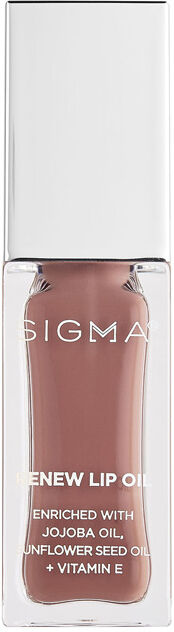
Sigma Renew Lip Oil-HushSigma Renew Lip Oils give your lips nourishment of a lip balm and the shine of a lip gloss in one perfect product These smooth, non-sticky lip oils add a protective layer of luxurious high-shine color, and hydration to your lips to help them look soft, supple, and juicy! Available Colours: Renew Lip Oil - Tint Renew Lip Oil - Tranquil Renew Lip Oil - All Heart Renew Lip Oil - Hush Ingredients: Tranquil: Polyglyceryl-2 Isostearate/Dimer Dilinoleate Copolymer, Dimer Dilinoleyl Dimer Dilinoleate, Diisostearyl Malate, Simmondsia Chinensis (Jojoba) Seed Oil, Caprylic/Capric Triglyceride, Disteardimonium Hectorite, Caprylyl Glycol, Helianthus Annuus (Sunflower) Seed Oil, Hydroxyacetophenone, Tocopherol, Tocopheryl Acetate, [May Contain / Peut contenir / Può contenere / (+/-): Titanium Dioxide (CI 77891), Iron Oxides (CI 77491), Iron Oxides (CI 77492), Red 7 Lake (CI 15850), Red 6 (CI 15850), Blue 1 Lake (CI 42090), Red 28 Lake (CI 45410), Yellow 5 Lake (CI 19140), Yellow 6 Lake (CI 15985)]. Hush: Polyglyceryl-2 Isostearate/Dimer Dilinoleate Copolymer, Dimer Dilinoleyl Dimer Dilinoleate, Diisostearyl Malate, Simmondsia Chinensis (Jojoba) Seed Oil, Caprylic/Capric Triglyceride, Disteardimonium Hectorite, Caprylyl Glycol, Citric Acid, Helianthus Annuus (Sunflower) Seed Oil, Hydroxyacetophenone, Tocopherol, Tocopheryl Acetate, [May Contain / Peut contenir / Può contenere / (+/-): Red 27 Lake (CI 45410), Iron Oxides (CI 77491), Blue 1 Lake (CI 42090), Red 28 Lake (CI 45410), Red 6 (CI 15850), Red 7 Lake (15850), Yellow 5 Lake (CI 19140), Yellow 6 Lake (CI 15985)]. All heart: Polyglyceryl-2 Isostearate/Dimer Dilinoleate Copolymer, Dimer Dilinoleyl Dimer Dilinoleate, Diisostearyl Malate, Simmondsia Chinensis (Jojoba) Seed Oil, Caprylic/Capric Triglyceride, Disteardimonium Hectorite, Caprylyl Glycol, Helianthus Annuus (Sunflower) Seed Oil, Hydroxyacetophenone, Tocopherol, Tocopheryl Acetate, [May Contain / Peut contenir / Può contenere / (+/-): Titanium Dioxide (CI 77891), Iron Oxides (CI 77491), Iron Oxides (CI 77492), Red 7 Lake (CI 15850), Red 6 (CI 15850), Blue 1 Lake (CI 42090), Red 28 Lake (CI 45410), Yellow 5 Lake (CI 19140), Yellow 6 Lake (CI 15985)]. Tint: Polyglyceryl-2 Isostearate/Dimer Dilinoleate Copolymer, Dimer Dilinoleyl Dimer Dilinoleate, Diisostearyl Malate, Simmondsia Chinensis (Jojoba) Seed Oil, Caprylic/Capric Triglyceride, Disteardimonium Hectorite, Caprylyl Glycol, Helianthus Annuus (Sunflower) Seed Oil, Hydroxyacetophenone, Tocopherol, Tocopheryl Acetate, [May Contain / Peut contenir / Può contenere / (+/-): Titanium Dioxide (CI 77891), Iron Oxides (CI 77491), Iron Oxides (CI 77492), Red 7 Lake (CI 15850), Red 6 (CI 15850), Blue 1 Lake (CI 42090), Red 28 Lake (CI 45410), Yellow 5 Lake (CI 19140), Yellow 6 Lake (CI 15985)].23,00 £*Shipping: 2,95 £Secure redirect to the provider
-
Georgia Boot RevAMP Chelsea - Womens 7.5 Brown Boot Medium"*Full-grain leather upper *Wider opening and nylon pull loops for easier on/off *Soft mesh lining *AMP LT footbed with Memory Foam *Steel shank *Goodyear welt construction *Oil- and slip-resistant polyurethane outsole *1-1/4"" heel height *ASTM F2892..."145,00 $*Shipping: 0,00 $Secure redirect to the provider
-
Sesderma Factor G Renew Eye ContourAn eye contour cream for wrinkles and signs of ageing. This product anti-aging cream. Firming and anti wrinkles: 5 growth factors. Anti-dark circles: vitamin K oxide, pinaxide (pinanediol and camphanediol). Anti-pufiness: liposomes. this product Cream is based on the concept of Genocosmetics, which acts on the cell nucleus and stimulates cell proliferation and activity.26,93 £*Shipping: 7,11 £Secure redirect to the provider
-
Dr Grandel Beautygen Renew Pearls 50mLA facial serum for wrinkles and signs of ageing. Beautygen renew l2 pearls serum-cream is able to stimulate cell repair on the skin, while protecting the skin from external aggressions. Apply in the morning and evening to cleansed, dry skin of the face, neck and décolleté. It can be used on its own or before applying moisturizing cream.54,84 £*Shipping: 5,34 £Secure redirect to the provider


-
What are the components of phospholipids?
Phospholipids are composed of a glycerol molecule, two fatty acid chains, a phosphate group, and a polar head group. The fatty acid chains are hydrophobic, meaning they repel water, while the phosphate group and polar head group are hydrophilic, meaning they attract water. This unique structure allows phospholipids to form the lipid bilayer that makes up cell membranes, with the hydrophobic tails facing inward and the hydrophilic heads facing outward towards the water. **
-
Why do phospholipids form a double layer?
Phospholipids form a double layer, known as a lipid bilayer, because of their amphipathic nature. This means that they have both hydrophilic (water-attracting) and hydrophobic (water-repelling) regions. When phospholipids are placed in an aqueous environment, the hydrophobic tails naturally orient themselves away from the water, while the hydrophilic heads interact with the water. This arrangement allows phospholipids to form a stable barrier, such as the cell membrane, with the hydrophobic tails sandwiched between two layers of hydrophilic heads. This lipid bilayer structure provides a selective barrier that controls the movement of molecules in and out of the cell. **
-
What is the difference between phospholipids and triglycerides?
Phospholipids and triglycerides are both types of lipids, but they have different structures and functions. Phospholipids have two fatty acid chains and a phosphate group, which allows them to form cell membranes and act as emulsifiers. Triglycerides, on the other hand, have three fatty acid chains and are used primarily as energy storage molecules. Additionally, triglycerides are hydrophobic, while phospholipids have both hydrophobic and hydrophilic regions, making them amphipathic molecules. **
-
Why do phospholipids have different structures in water?
Phospholipids have different structures in water because of their amphiphilic nature. This means that they have both hydrophilic (water-attracting) and hydrophobic (water-repelling) regions. In water, phospholipids arrange themselves in a bilayer with the hydrophilic heads facing the water and the hydrophobic tails facing each other. This arrangement allows phospholipids to form cell membranes and other structures that are essential for the functioning of living organisms. The different structures of phospholipids in water allow them to fulfill their roles in maintaining the integrity and function of biological membranes. **


How do phospholipids from plant and animal sources differ?
Phospholipids from plant and animal sources differ in their fatty acid composition. Plant phospholipids typically contain higher levels of unsaturated fatty acids, such as linoleic and linolenic acids, while animal phospholipids contain higher levels of saturated fatty acids, such as palmitic and stearic acids. This difference in fatty acid composition can affect the physical properties of the phospholipids, such as their fluidity and melting point. Additionally, plant phospholipids may also contain unique fatty acids, such as alpha-linolenic acid, which are not typically found in animal phospholipids. **
In the double layer of phospholipids, what fluid is present?
In the double layer of phospholipids, the fluid present is known as the lipid bilayer. This lipid bilayer is composed of two layers of phospholoids, with the hydrophilic (water-attracting) heads facing outward and the hydrophobic (water-repelling) tails facing inward. This arrangement creates a fluid and flexible barrier that surrounds the cell and regulates the movement of molecules in and out of the cell. The fluidity of the lipid bilayer allows for the dynamic movement of proteins and other molecules within the cell membrane. **
Top-Angebote
Products related to Phospholipids:
-
Maria Nila Cream Heat Spray to Rebuild Damaged Hair 75mLA hair-care product. Cream Heat Spray rebuilds damaged hair, adds moisture, and prevents split ends while providing heat protection. Nourishing cream-based spray rebuilds damaged hair for improved health. Provides heat protection to shield hair from damage when using hot tools. Versatile formula can be used on both damp and dry hair for maximum convenience.14,03 £*Shipping: 5,34 £Secure redirect to the provider
-
Neutrogena Visibly Renew Body LotionA body lotion for dry or dehydrated skin. Provides a daily moisturizing. Day after day, skin is visibly smoother, flexible and elastic. For best results, apply daily throughout the body in the morning and in the evening, twice a day.25,35 £*Shipping: 15,83 £Secure redirect to the provider
-
Sigma Renew Lip Oil-HushSigma Renew Lip Oils give your lips nourishment of a lip balm and the shine of a lip gloss in one perfect product These smooth, non-sticky lip oils add a protective layer of luxurious high-shine color, and hydration to your lips to help them look soft, supple, and juicy! Available Colours: Renew Lip Oil - Tint Renew Lip Oil - Tranquil Renew Lip Oil - All Heart Renew Lip Oil - Hush Ingredients: Tranquil: Polyglyceryl-2 Isostearate/Dimer Dilinoleate Copolymer, Dimer Dilinoleyl Dimer Dilinoleate, Diisostearyl Malate, Simmondsia Chinensis (Jojoba) Seed Oil, Caprylic/Capric Triglyceride, Disteardimonium Hectorite, Caprylyl Glycol, Helianthus Annuus (Sunflower) Seed Oil, Hydroxyacetophenone, Tocopherol, Tocopheryl Acetate, [May Contain / Peut contenir / Può contenere / (+/-): Titanium Dioxide (CI 77891), Iron Oxides (CI 77491), Iron Oxides (CI 77492), Red 7 Lake (CI 15850), Red 6 (CI 15850), Blue 1 Lake (CI 42090), Red 28 Lake (CI 45410), Yellow 5 Lake (CI 19140), Yellow 6 Lake (CI 15985)]. Hush: Polyglyceryl-2 Isostearate/Dimer Dilinoleate Copolymer, Dimer Dilinoleyl Dimer Dilinoleate, Diisostearyl Malate, Simmondsia Chinensis (Jojoba) Seed Oil, Caprylic/Capric Triglyceride, Disteardimonium Hectorite, Caprylyl Glycol, Citric Acid, Helianthus Annuus (Sunflower) Seed Oil, Hydroxyacetophenone, Tocopherol, Tocopheryl Acetate, [May Contain / Peut contenir / Può contenere / (+/-): Red 27 Lake (CI 45410), Iron Oxides (CI 77491), Blue 1 Lake (CI 42090), Red 28 Lake (CI 45410), Red 6 (CI 15850), Red 7 Lake (15850), Yellow 5 Lake (CI 19140), Yellow 6 Lake (CI 15985)]. All heart: Polyglyceryl-2 Isostearate/Dimer Dilinoleate Copolymer, Dimer Dilinoleyl Dimer Dilinoleate, Diisostearyl Malate, Simmondsia Chinensis (Jojoba) Seed Oil, Caprylic/Capric Triglyceride, Disteardimonium Hectorite, Caprylyl Glycol, Helianthus Annuus (Sunflower) Seed Oil, Hydroxyacetophenone, Tocopherol, Tocopheryl Acetate, [May Contain / Peut contenir / Può contenere / (+/-): Titanium Dioxide (CI 77891), Iron Oxides (CI 77491), Iron Oxides (CI 77492), Red 7 Lake (CI 15850), Red 6 (CI 15850), Blue 1 Lake (CI 42090), Red 28 Lake (CI 45410), Yellow 5 Lake (CI 19140), Yellow 6 Lake (CI 15985)]. Tint: Polyglyceryl-2 Isostearate/Dimer Dilinoleate Copolymer, Dimer Dilinoleyl Dimer Dilinoleate, Diisostearyl Malate, Simmondsia Chinensis (Jojoba) Seed Oil, Caprylic/Capric Triglyceride, Disteardimonium Hectorite, Caprylyl Glycol, Helianthus Annuus (Sunflower) Seed Oil, Hydroxyacetophenone, Tocopherol, Tocopheryl Acetate, [May Contain / Peut contenir / Può contenere / (+/-): Titanium Dioxide (CI 77891), Iron Oxides (CI 77491), Iron Oxides (CI 77492), Red 7 Lake (CI 15850), Red 6 (CI 15850), Blue 1 Lake (CI 42090), Red 28 Lake (CI 45410), Yellow 5 Lake (CI 19140), Yellow 6 Lake (CI 15985)].23,00 £*Shipping: 2,95 £Secure redirect to the provider
-
Georgia Boot RevAMP Chelsea - Womens 7.5 Brown Boot Medium"*Full-grain leather upper *Wider opening and nylon pull loops for easier on/off *Soft mesh lining *AMP LT footbed with Memory Foam *Steel shank *Goodyear welt construction *Oil- and slip-resistant polyurethane outsole *1-1/4"" heel height *ASTM F2892..."145,00 $*Shipping: 0,00 $Secure redirect to the provider
-
What exactly are phospholipids?
Phospholipids are a class of lipids that are a major component of cell membranes. They consist of a hydrophilic (water-attracting) head and two hydrophobic (water-repelling) tails. This unique structure allows phospholipids to form a bilayer in the cell membrane, with the hydrophilic heads facing the aqueous environment inside and outside the cell, and the hydrophobic tails facing each other in the middle of the membrane. This structure provides the cell membrane with its characteristic flexibility and selective permeability. **
-
What properties do phospholipids possess?
Phospholipids are a class of lipids that possess both hydrophilic (water-attracting) and hydrophobic (water-repelling) properties. This dual nature allows phospholipids to form the basic structure of cell membranes, with the hydrophilic head facing the watery environment and the hydrophobic tails facing inward. This arrangement creates a barrier that separates the interior of the cell from its external environment. Additionally, phospholipids are amphipathic, meaning they have both polar and nonpolar regions, which gives them the ability to self-assemble into bilayers and vesicles. **
-
What are the components of phospholipids?
Phospholipids are composed of a glycerol molecule, two fatty acid chains, a phosphate group, and a polar head group. The fatty acid chains are hydrophobic, meaning they repel water, while the phosphate group and polar head group are hydrophilic, meaning they attract water. This unique structure allows phospholipids to form the lipid bilayer that makes up cell membranes, with the hydrophobic tails facing inward and the hydrophilic heads facing outward towards the water. **
-
Why do phospholipids form a double layer?
Phospholipids form a double layer, known as a lipid bilayer, because of their amphipathic nature. This means that they have both hydrophilic (water-attracting) and hydrophobic (water-repelling) regions. When phospholipids are placed in an aqueous environment, the hydrophobic tails naturally orient themselves away from the water, while the hydrophilic heads interact with the water. This arrangement allows phospholipids to form a stable barrier, such as the cell membrane, with the hydrophobic tails sandwiched between two layers of hydrophilic heads. This lipid bilayer structure provides a selective barrier that controls the movement of molecules in and out of the cell. **
Similar search terms for Phospholipids
-
Sesderma Factor G Renew Eye ContourAn eye contour cream for wrinkles and signs of ageing. This product anti-aging cream. Firming and anti wrinkles: 5 growth factors. Anti-dark circles: vitamin K oxide, pinaxide (pinanediol and camphanediol). Anti-pufiness: liposomes. this product Cream is based on the concept of Genocosmetics, which acts on the cell nucleus and stimulates cell proliferation and activity.26,93 £*Shipping: 7,11 £Secure redirect to the provider
-
Dr Grandel Beautygen Renew Pearls 50mLA facial serum for wrinkles and signs of ageing. Beautygen renew l2 pearls serum-cream is able to stimulate cell repair on the skin, while protecting the skin from external aggressions. Apply in the morning and evening to cleansed, dry skin of the face, neck and décolleté. It can be used on its own or before applying moisturizing cream.54,84 £*Shipping: 5,34 £Secure redirect to the provider
-
O'Neill s O'riginals Reform Vintage T-Shirt in Carob Brown, Size SmallThe O'Riginals Men's Reform Vintage Short Sleeve Tee is crafted from 100% organic cotton with a relaxed fit that moves with you. This O'Riginals tee features garment-dyed fabric and crackle ink graphics for that perfectly worn-in look. Built...38,00 $*Shipping: 0,00 $Secure redirect to the provider
-
Neutrogena Visibly Renew Body Lotion 750mLA body lotion for dry or dehydrated skin. Provides a daily moisturizing. Day after day, skin is visibly smoother, flexible and elastic. For best results, apply daily throughout the body in the morning and in the evening, twice a day.16,00 £*Shipping: 10,02 £Secure redirect to the provider
-
What is the difference between phospholipids and triglycerides?
Phospholipids and triglycerides are both types of lipids, but they have different structures and functions. Phospholipids have two fatty acid chains and a phosphate group, which allows them to form cell membranes and act as emulsifiers. Triglycerides, on the other hand, have three fatty acid chains and are used primarily as energy storage molecules. Additionally, triglycerides are hydrophobic, while phospholipids have both hydrophobic and hydrophilic regions, making them amphipathic molecules. **
-
Why do phospholipids have different structures in water?
Phospholipids have different structures in water because of their amphiphilic nature. This means that they have both hydrophilic (water-attracting) and hydrophobic (water-repelling) regions. In water, phospholipids arrange themselves in a bilayer with the hydrophilic heads facing the water and the hydrophobic tails facing each other. This arrangement allows phospholipids to form cell membranes and other structures that are essential for the functioning of living organisms. The different structures of phospholipids in water allow them to fulfill their roles in maintaining the integrity and function of biological membranes. **
-
How do phospholipids from plant and animal sources differ?
Phospholipids from plant and animal sources differ in their fatty acid composition. Plant phospholipids typically contain higher levels of unsaturated fatty acids, such as linoleic and linolenic acids, while animal phospholipids contain higher levels of saturated fatty acids, such as palmitic and stearic acids. This difference in fatty acid composition can affect the physical properties of the phospholipids, such as their fluidity and melting point. Additionally, plant phospholipids may also contain unique fatty acids, such as alpha-linolenic acid, which are not typically found in animal phospholipids. **
-
In the double layer of phospholipids, what fluid is present?
In the double layer of phospholipids, the fluid present is known as the lipid bilayer. This lipid bilayer is composed of two layers of phospholoids, with the hydrophilic (water-attracting) heads facing outward and the hydrophobic (water-repelling) tails facing inward. This arrangement creates a fluid and flexible barrier that surrounds the cell and regulates the movement of molecules in and out of the cell. The fluidity of the lipid bilayer allows for the dynamic movement of proteins and other molecules within the cell membrane. **
* All prices are inclusive of VAT and, if applicable, plus shipping costs. The offer information is based on the details provided by the respective shop and is updated through automated processes. Real-time updates do not occur, so deviations can occur in individual cases. ** Note: Parts of this content were created by AI.